What if you had superhuman memory?
Finally, a personal knowledge base that makes all your information instantly available.
#memory turns your personal associations into powerful shortcuts to your information.
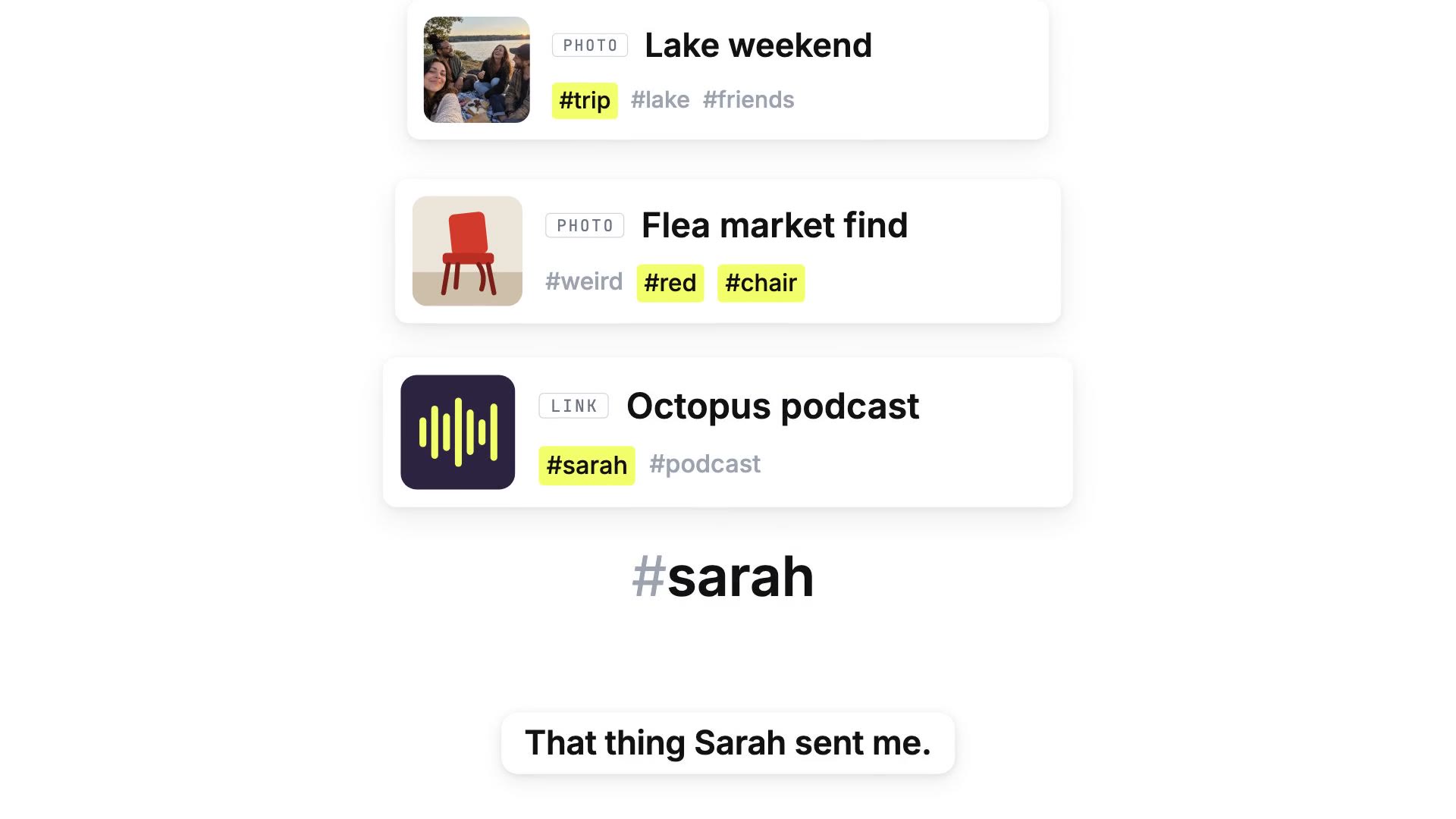
A more personal way to search.
Your mind makes connections all the time. Who sent it. Why it mattered. What it reminded you of.
Save a file, photo, link or note with the words that connect it to you. Start typing one to bring it back, even if that word never appears in the original.
No question to formulate. No need to speak.
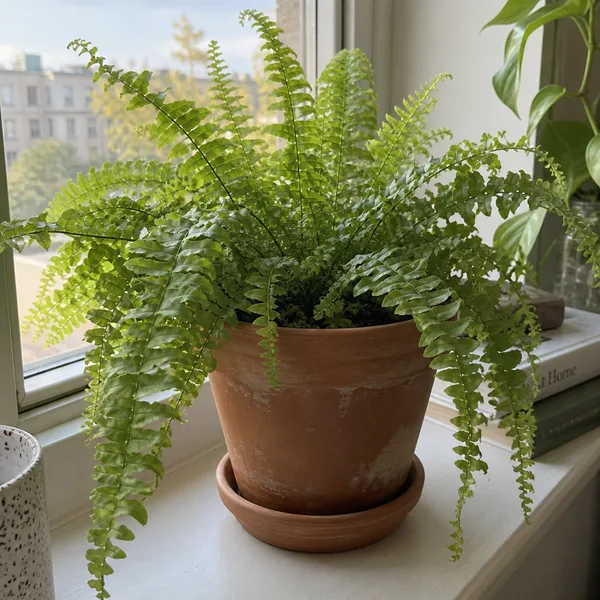
“How was I supposed to care for this plant?”
You’re watering the plants. Does this one need moist soil or time to dry out?
You saved the photo and care note with “fern,” “watering” and “livingroom.” Start typing any of those cues. There’s what you need to know.
Find it with #fern
Remember a little. Find the rest.
Start with keywords.
Choose words you’d look for later. Memories with those keywords appear as you type.
Add what you want to keep.
A link, note, photo, or document. Save it with those words.
Find it again.
Type one of your saved keywords. Add another to narrow the results.
Something you need.
A word you remember.
- The oven stops working.
- The repair service asks for the warranty. You saved the document with “oven” and “warranty”, so you know what to look for.#oven#warranty
- You want to make that cake again.
- Which recipe was it, and what did you change? Keep the recipe link with your own notes, ready for next time.#cake#recipe
Other examples
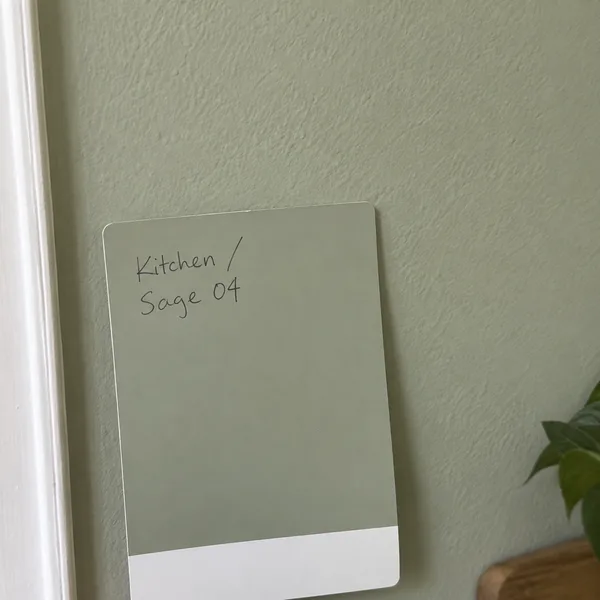
You’re buying more paint. Which shade matches the kitchen?
Find it with #paint
#memory on iPhone
Remember a little.
Find the rest.
Preorder #memory for iPhone, iPad and Mac.


Your memories stay personal. Sharing is your choice. Privacy & security
The thinking behind it
Research on memory looks at how we choose reminders, connect information to ourselves, and use tools to keep track of things. Here are seven papers for further reading.
- The generation effect Slamecka & Graf, 1978
In five experiments, people remembered words they generated better than words they only read.
- Encoding specificity Tulving & Thomson, 1973
Explores how the way information is learned affects which cues help people recall it.
- Levels of processing Craik & Lockhart, 1972
A framework for studying how the way we process information relates to later memory.
- The self-reference effect Rogers, Kuiper & Kirker, 1977
In two experiments, people recalled adjectives better after considering whether those words described themselves.
- Retrieval practice Roediger & Karpicke, 2006
Students who practiced recalling passages remembered more on delayed tests than students who restudied them.
- Self-generated cues Tullis & Benjamin, 2015
People asked to create cues for later recall chose more distinctive cues than people asked to describe the same items.
- Cognitive offloadingRisko & Gilbert, 2016
A review of how actions and external tools can reduce the mental demands of a task.
These papers study memory and cognition. They do not evaluate #memory itself.